What Should You Look for in a Digital Label Machine?
A good Digital Label Machine should match your labels, materials, and run lengths first, then prove its print quality, speed, and finishing ability on real jobs. I look at five things: production needs, print quality and substrate fit, configuration, total cost of ownership, and supplier support. A plate-free system suits short runs, many designs, and rush orders, because it skips plate making and long setups. Flexo may still win on long, repeated runs. In this guide, I explain each point in plain terms and show how our Shanghai Honghua machine fits. Use these points to shortlist suppliers with confidence.
Start With Your Production Requirements
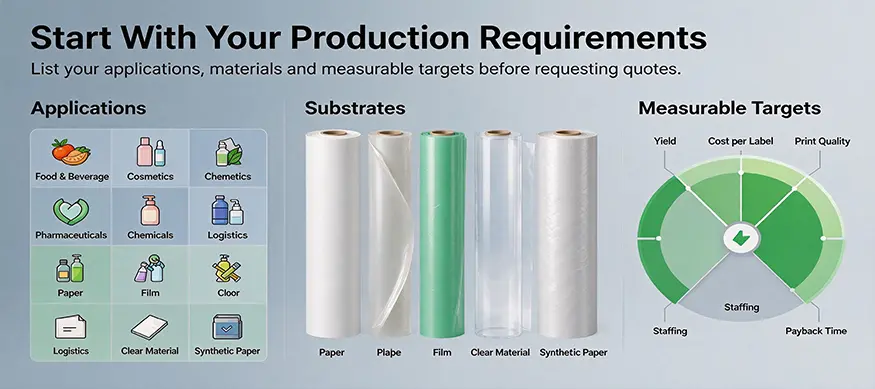
Define Your Applications and Substrates
Before they look at Digital Label Machines, I tell people to make a list of the things they print. There are different rules about how labels should stick to different things and have different law text for food and drinks, cosmetics, drugs, chemicals, transportation, and store items. Next, make a list of the materials you use, such as metals, paper, films, and clear materials. A label for chemicals that will get worn down needs a different kind of paper and ink than a label for cosmetics that will only be used once. You will use this list to ask suppliers for things. It also helps people be honest, since it costs more in the long run to hire someone else to work on a machine that only handles some of your stocks.
Understand How Digital Label Printing Works
Understand how things work before you ask them. In a normal job, the first step is to prepare the work and do digital front-end processing. After that, the machine turns the base over, lines it up, prints, and waits for the ink to dry. The next step could be to seal, die cut, inspect, or rewind the tape. All four types of systems are different when it comes to the types of materials they can print on, how long they last, and how well they print colors. Also, make sure you know how fast the RIP is, how to deal with colors, and whether the files will work together. TIFF and PDF files are common for prepress work, and our machine can handle them. You should ask each supplier how they handle and test variable data printing if you need to print barcodes, QR codes, or labels with a unique number on them.
Set Measurable Targets
Quotes that aren't clear come from goals that aren't clear. Write down the yield, cost per label, print quality, floor space, staffing, and time it takes to get your money back. Then give them to each supplier so that their quotes are correct for your plant. It's easy to forget about the floor. Our machine is 2 m x 1.5 m x 1.9 m and weighs 1,500 kg, so you can figure out how much it will weigh on the floor right away. It needs 20 kW of AC 380V and 0.6 to 0.8 MPa of work air to work. Let us know if the power your business uses is different. You can set the tools to 110V, 220V, or 380V so they can work with your power lines.
Evaluate Print Quality, Productivity, and Substrate Compatibility
Judge Print Quality on Real Files
Headline specs don't always tell the whole story, so you should check your own work. Check out the sharpness, color gamut, spot colors, fine writing, barcodes, and registration by looking at the whole roll. Our machine can print in CMYK four colors, and it can also print in any color on the front and back. Its built-in printer can keep its position within 0.005 mm, which is helpful for jobs where layers need to line up. You should ask suppliers to show that all of their meters are the same, not just one good one. It is possible to check prints that are made straight from digital data thanks to industry standards like ISO 12647-8. This is useful for showing proof of acceptance.
Measure Real Productivity, Not Rated Speed
The stated speed of a Digital Label Machine can change depending on the type of material, the amounts of ink used, the variable data, the custom colors, and the curing needs. Setting up the files, printing, drying, finishing, and rewinding are all parts of the total job time that I like. When you need to rush, make a lot of copies, or order a lot of different designs, a plate-free machine can help you save time because it doesn't have to open and expose plates. As each seller to do a normal job, and keep track of how long it takes from getting the file to having the roll ready. Check out how much waste there is while it's setting too. Even if it burns paper every time it changes, a fast press can still charge more per label. Our one-of-a-kind ink circuit design has a holiday mode that turns on as soon as the power goes out. This is helpful for plants that won't need to be used for a while.
Check Substrate Range and Durability
Find out what sizes of rolls, widths, and thicknesses a machine can handle. The diameter of ours rolls can go out and back in at 800 mm, and it can feed material that is 75 mm to 350 mm wide and 0.02 mm to 1 mm thick. You can print up to 322 mm wide. They can be used on labels, logos, stickers, and color-printed rolls that stick on their own. Then test the label in real life, which means putting it through water, chemicals, wear and tear, UV light, oils, and temperature changes. The ASTM D3359 tape test is a common way to see how sticky something is. FINAT also has a list of label test methods in its Technical Handbook. You can show proof to your customers when you use well-known tests.
Choose the Right Machine Configuration and Compare Printing Methods
Decide Between a Standalone Printer and an Integrated Line
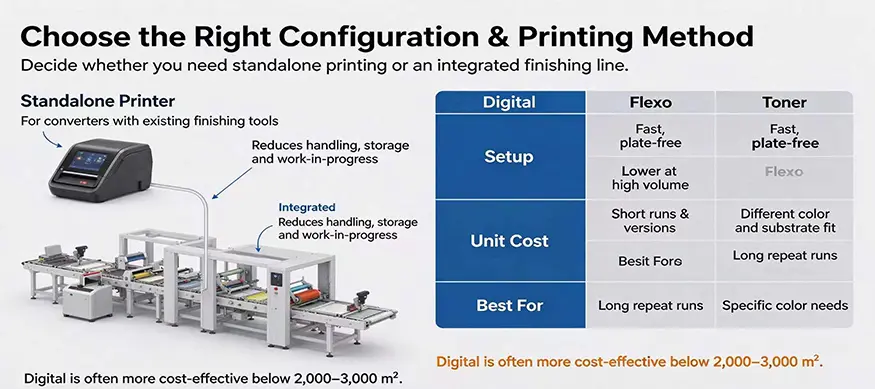
Tell them right away if you only need labels printed or if you also need the items finished and ready to ship. People who already have finishing tools can use a stand-alone printer. An integrated line can cut down on the time it takes to handle, work with, ship, and store materials that are still being worked on. Look at what your buyers want and compare it to what you do for die cutting, matrix stripping, slicing, rewinding, laminating, varnishing, and foiling. With its patents, Shanghai Honghua can cut labels with dies, move labels quickly, and get rid of window waste. Putting things together is a real part of our tech work. Before you print, let us know what else you need so we can talk about your options. That way, you can change things as needed without being tied to a layout you can't change.
Compare Digital With Flexographic and Toner Systems
Aside from price, you should also think about how well each method does the job. Things that are digital don't need plates, tools, setup time, or waste to be ready. Because of this, they work well for small runs, customization, version changes, and having a lot of SKUs. The cost of flexographic tools can go down over time if you make a lot of the same design. Below about 2,000 to 3,000 square meters, digital generally costs less than analog. But the exact point where you break even will depend on how much it costs to do the work, buy the supplies, and finish the job. Inkjet and toner systems also have different color looks, print ranges, and the costs of supplies. Look at past jobs to get ideas for short, medium, and long-term projects before you decide.
See What Our Plate-Free Machine Offers
As you can see, our quick and smart Digital Label Machine doesn't need plates and is designed for digital production that changes on the fly. Here are some of the best things about it.
- Plate-free production: The machine cuts down on costs and lead times by eliminating the need to open and expose plates. Traditional plate-making would be slow and expensive for all types of small-volume, multi-design, multi-batch, and rush-order jobs on color-printed rolls, labels, and stickers that stick on their own. This is because the artwork changes all the time. When these things happen, this method works well. To set up, go from file to press right away.
- Dual curing: Two different ways of curing are available on the machine: LED curing and standard curing. Its unique slit LED technology keeps all the light inside, so the printhead doesn't get clogged up while it's making prints. With two ways to cure on one platform, production teams can better handle different materials and jobs. This is important for long shifts because tools that get stuck waste time and materials.
- Precision and protection: The machine can print on both the front and back in any color, and the built-in printing unit can repeat positions to within 0.005 mm of the original. While they are being used, the printheads are safer because they automatically find and protect against unwanted items. All of these features work together to help with jobs that need to be registered and keep costly parts safe.
Calculate Total Cost of Ownership and Select a Supplier
Count Every Cost, Not Only the Price Tag
The total cost of ownership helps you choose an investment that is fair. You have to pay extra for any extra modules, software, installation, training, shipping, import taxes, financing, utilities, air, and getting the floor ready. That's on top of the price of the Digital Label Machine itself. Ink, printheads, filters, lamps, rollers, blades, cleaning materials, energy, repair workers, and substrate waste are some of the things that a business has to pay for. When people in the U.S. buy electrical equipment, they should also make sure that it meets their company's needs. In the United States, NFPA 79 is the rule for electrical parts in industrial equipment. When you talk to suppliers, make sure you know how their machines meet this rule and what proof they give. Our machines have PLC control systems that meet international standards. To help you plan the installation, we offer free unique solution drawings.
Calculate Break-Even and Return
Second, find out how much it costs per label for different run sizes. Then, compare that to how much it costs to outsource or use flexographic production. Make three possible outcomes: growth that is low, growth that is expected, and growth that is high. Get rid of some of your stock, hire fewer people to do work for you, and take on more small orders that you couldn't handle before. When you don't use plates, you save money on exposure and plates. This is especially true for small jobs with lots of different designs. Also, our machine is built to last 20 years, and we'll help you with any problems for life. You can pay for it over many years of production, which means you can spread the cost out. Tell the truth when you talk. The people in charge of money will be happy with a case that is safe and still makes money.
Check Supplier Capability and Support
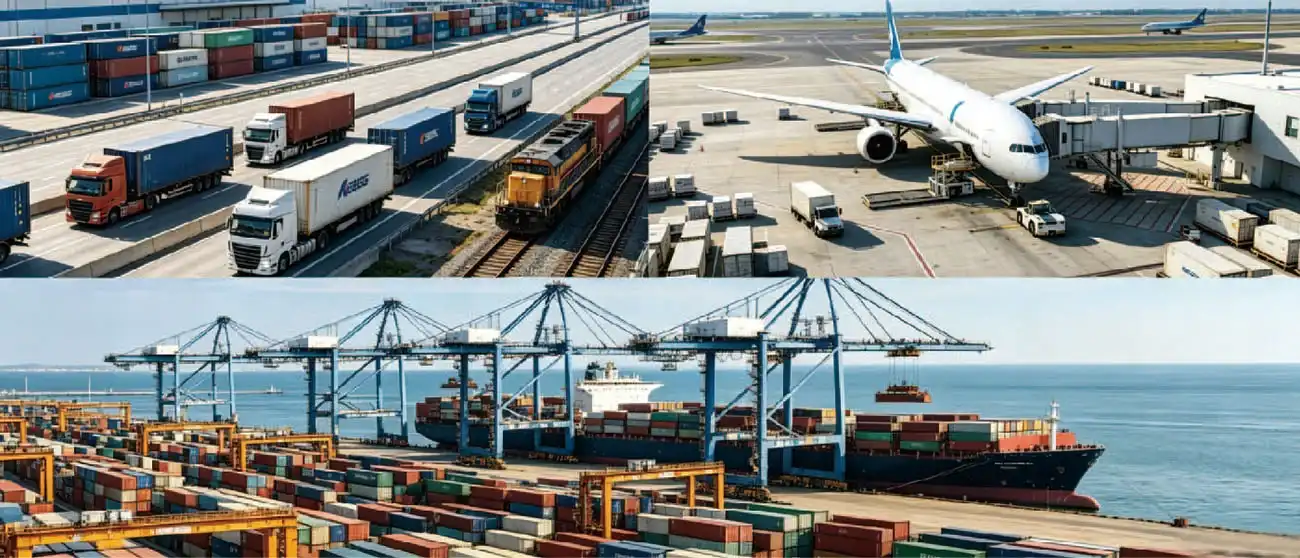
Being able to count on the provider can have an impact on profit just like the specs. If they are willing to test your artwork and materials, ask them if they have worked with similar programs before and where they get their parts and if they have extras. You should also ask them what quality control steps they take. You can get a 12-month guaranty from Shanghai Honghua, as well as technical support for life, quick response times after the sale, and remote technical help. It takes about 60 days to make something, and we can ship by sea, air, train, or fast. Some of the terms we offer are FOB (Shanghai/Ningbo), CIF, and DAP. It's easy for us to ship goods all over the world thanks to our warehouses in Southeast Asia and factories in China. Be sure to write down what the acceptance tests, software, warranty, and refills cover before you sign. It's easier to avoid arguments if you use clear language.
Use a Buying Checklist Before You Buy a Digital Label Machine
Run a Sample Test With Your Own Jobs
Things don't always go as planned when you have a well-thought-out schedule. Make sure you know the web width, print width, media thickness, roll size, color setting, speed, and finishing needs. Then, ask for a test sample that has your real artwork, hard colors, fine text, barcodes, and other things that would be on the final product. Check to see how long it takes to make, stick, cure, register, and set up. Take notes on what you find. Check to see if the written codes for barcodes have been compared to the GS1 General Specifications. All GS1 data and barcodes must follow these rules. If you want to try one unit, you can. There is no minimum order size for sample units or large sales, so you can see how well it works before ordering a lot.
Match the Configuration to Your Business Type
Each buyer has different needs when it comes to speed, automation, and finishing. Small businesses and people who only make a few items at a time usually want things to be easy to use, with little waste during setup and quick changes. When label changers work in more than one shift, they need to think about things like throughput, color stability, automatic processes, checking, and finishing. People who work for big businesses need stable area service and web access. Distributors and OEM buyers often want to know about private-label options, one-of-a-kind modules, and who is in charge of customer service. As an OEM or ODM service provider, we can make unique hardware, software features, and branding. We can work with 110V, 220V, or 380V. Not the largest machine on the price list, but the set-up that works for your current needs and the amount of growth you can expect.
Score Your Options Before You Decide
Rate each machine on how well it does its job, how well it prints, how fast it works, how well it ends jobs, how much it costs to run, how well it works with suppliers, and how much room it has for growth. Label the items as "must-have" or "nice-to-have," and then use written specs, sample results, customer references, and service claims to give them marks. The buying, technical, production, and finance teams should all be involved in the review so that no one just chooses based on speed or price. Before you pay, you should write down that you agree with the performance. The best machine is the one that keeps giving you value over time. Because of this, you should give long-term service just as much weight as the first price. Applications that fit and test results are good places to start if you have to.
Conclusion
The first thing you need to do to choose a Digital Label Machine is to write down your production data. This includes uses, materials, run lengths, and goals that can be measured. So, use your artwork to test the print quality, registration, real job time, and material range, and then compare the results to standard ways such as ASTM D3359. Because it doesn't need plates or long setup times, digital printing is better for small runs and often changing art. But for long jobs that need to be done over and over, flexo can be a better value. The real picture is shown by the total cost of ownership, which includes things like shipping, fixes, and new parts. Support from the supplier, warranty terms, sample testing, and written acceptance criteria all work together to protect the investment. You can find the machine that meets your needs now and has room for growth by adding up the scores for these things.
FAQ
What is a Digital Label Machine used for?
And since it doesn't have printing plates, it makes art from a computer file straight onto label stock. Colored rolls, self-sticky labels, stickers, trademarks, and short runs with a lot of different designs work well on it.
When does digital cost less than flexo?
Digital printing is often cheaper for small runs and frequent design changes because it doesn't need plates or long make-ready times. Flexo can save you money when you print a lot of pages. Look at your old sales to find the point where you break even.
What should I send a supplier before requesting a quote?
Let them know about the label sizes, materials, monthly quantities, run lengths, color requirements, changeable data requirements, and steps for finishing. Sample art is great because it lets the supplier try out a real job.
What support comes with the Shanghai Honghua machine?
For the life of the guarantee, we'll fix any problems with our machine for free. It takes about 60 days to make something, and technical help can be given from afar. It's also possible to get spare parts and service.
Request a Digital Label Machine Recommendation From Shanghai Honghua
Are you ready to get a Digital Label Machine that works for you? Shanghai Honghua has been making Digital Label Machines for 20 years. They come with a warranty that lasts for 12 months and FREE lifetime technical support. We'll help you set up your printer if you email us at [email protected] with the amount of money you want to spend each month and the size of the labels you need. Go to honghualabeltech.com to learn more.
References
1. FINAT Technical Handbook, 10th Edition, 2019
2. ASTM D3359 Standard Test Methods for Rating Adhesion by Tape Test, 2023
3. ISO 12647-8 Graphic Technology: Validation Print Processes Working Directly From Digital Data, 2021
4. GS1 General Specifications, 2024
5. NFPA 79 Electrical Standard for Industrial Machinery, 2024
6. Smithers, The Future of Digital Print for Packaging to 2028, 2023