Product Recommendations
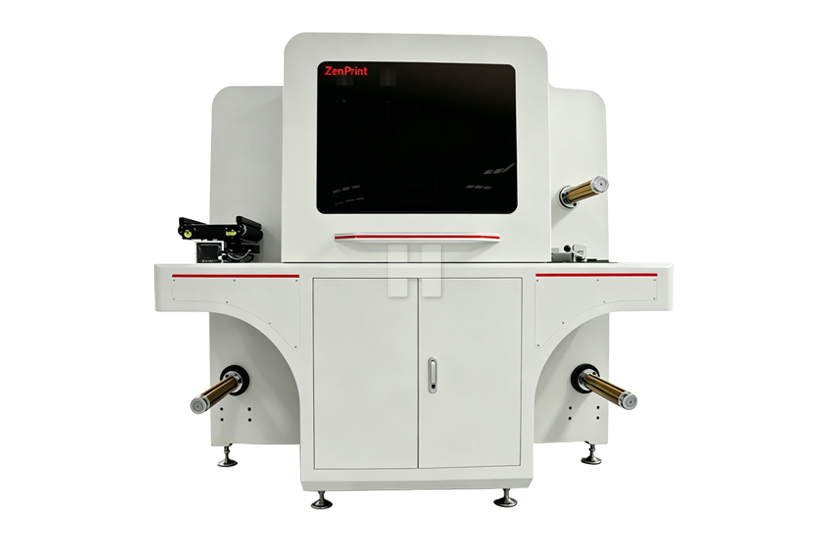
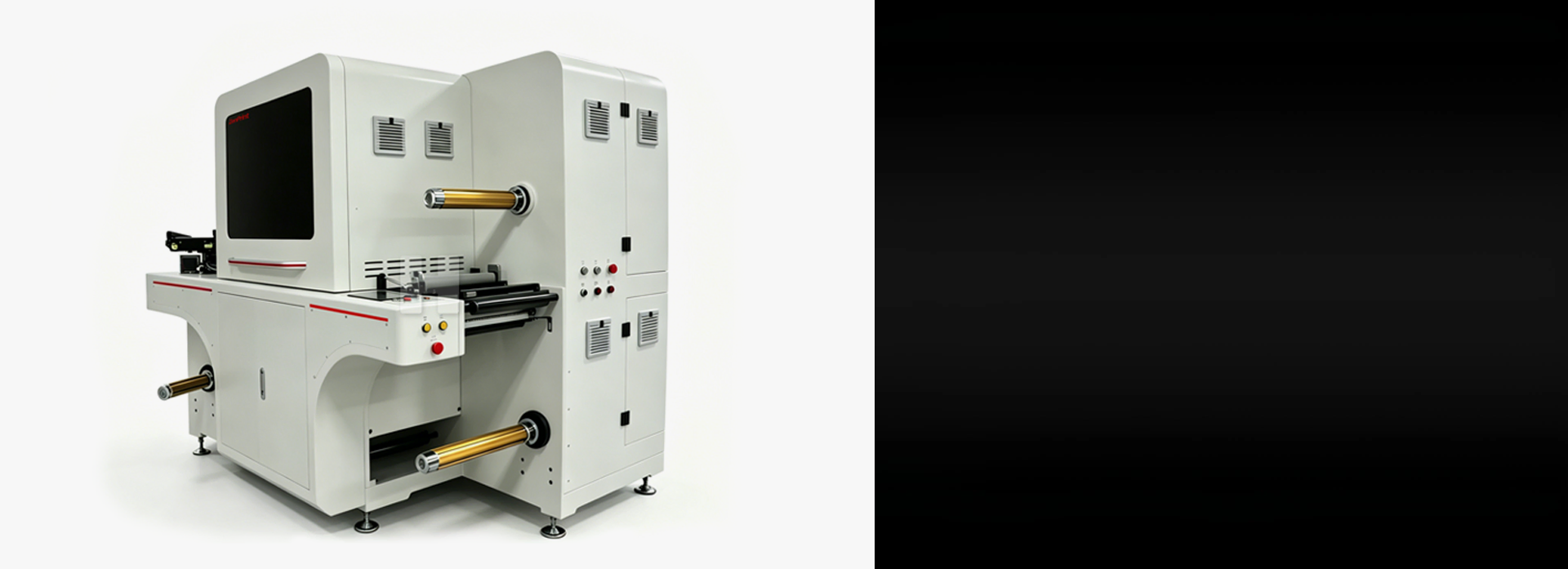
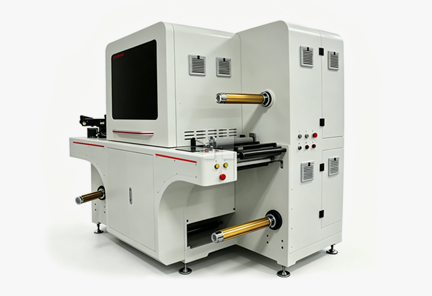
Shanghai Honghua Digital Equipment Co., Ltd

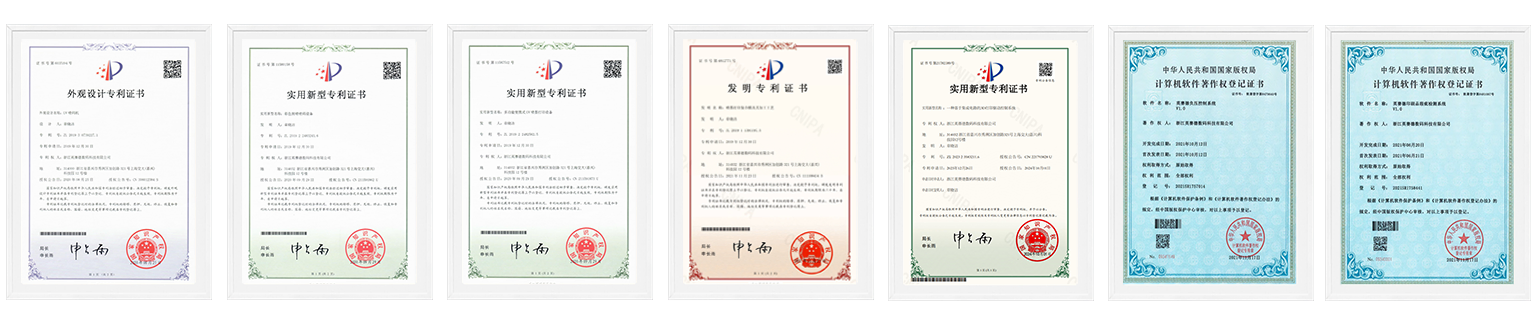
Enterprise Qualification Certificate
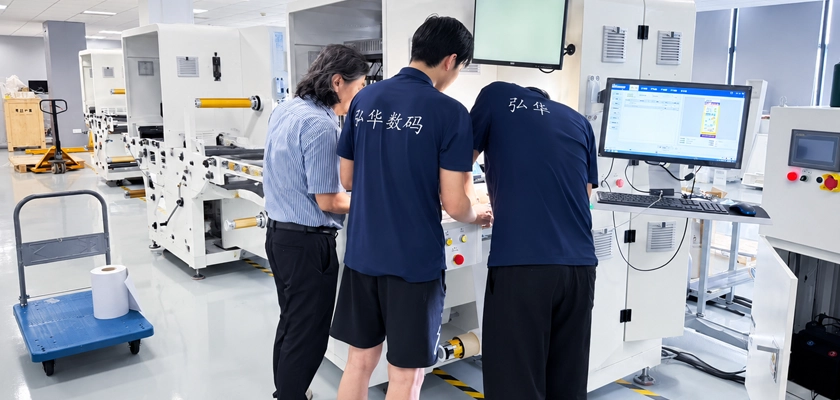
Blog recommendations
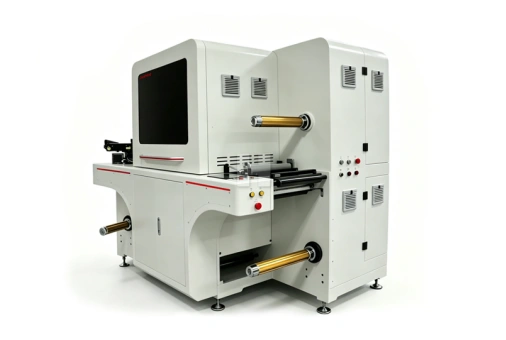
A digital roll label printer helps businesses produce high-quality roll labels faster without plates. It is designed for short runs, variable data printing, and flexible packaging needs. This technology supports industries requiring quick changes, consistent quality, and lower production costs.
Understanding Digital Roll Label Printers: Technology and Applications
How the Core Technology Works
These days, roll-fed label printers mostly use piezoelectric inkjet imaging, which fires tiny drops exactly onto substrate surfaces without touching them. Flexographic printing needs actual plates to be made, exposed, and mounted. A Digital Roll Label Printer, on the other hand, can read TIFF, PDF, or similar files and print them right away. This makes the repeat positioning accuracy as good as 0.005 mm, which is very important for printing serialized barcodes, micro-text, or multi-color artwork that needs to be tightly registered.
Substrates and Material Versatility
These tools can work with a huge variety of materials. Material thickness compatibility ranges from 0.02 mm to 1 mm, and feed material widths usually range from 75 mm to 350 mm. This means that normal paper labels, BOPP films, PET, PE, silver metallic films, and unique synthetic substrates can all be used on the same platform without having to change the way it is set up mechanically. The substrate you choose has a direct effect on how well the ink sticks, how resistant it is to chemicals, and how long it lasts on the shelf. That's why procurement engineers should always make sure that the ink and substrate are compatible before committing to a substrate specification.
Key Benefits of Digital Roll Label Printers for B2B Procurement
Variable Data Printing and Short-Run Economics
One clear business benefit is being able to print serialized QR codes, sequential batch numbers, or custom branding without having to pay extra for each job. When compared to flexographic setup, Digital Roll Label Printers regularly save 15–20% in material waste and don't require any plate costs. This is a savings that grows quickly for product lines with a lot of SKUs or that need to be reordered often. When purchasing managers look at the total cost of ownership, these numbers make digital printing the clear winner for runs shorter than about 3,000 linear meters.
When it comes to production, these are the main benefits that make this technology appealing to B2B buyers:
- Zero plate cost per job: No plates need to be made or exposed, so there are no costs for pre-press, and delivery times are much shorter for urgent or unique orders.
- Exceptional color fidelity: The CMYK four-color output and the usual dual curing system work together to produce bright, long-lasting results that meet the high standards for retail and pharmacy packaging without any spot color surcharges.
- Front-and-back secondary printing: The integrated printing unit allows for random color overprinting on both sides of the web. This makes it possible to print label designs that are hard for traditional narrow-web presses to do cost-effectively.
- Consistent ink performance year-round: A full-circuit ink temperature control system, which works from the main ink tubes through the whole circuit, keeps the thickness from changing, so the dots always go where they should, even when the temperature outside changes with the seasons.
These benefits directly lead to measurable production gains: shorter lead times, lower scrap rates, and the ability to make last-minute changes to orders without incurring costs—all of which are necessary for label converters that work with markets for fast-moving consumer goods.
Comparison and Decision-Making: Choosing the Right Digital Roll Label Printer
Digital vs. Flexographic vs. Thermal Transfer
Flexographic printing is still a good deal for very long, static print runs where the plates don't wear out very quickly. Thermal transfer printing works well for printing simple black-and-white variable data on manmade materials. Digital Roll Label Printers, on the other hand, work best when run lengths are short, artwork changes often, or color quality must be realistic. The useful split point, where digital is cheaper than flexo, is usually somewhere between 1,000 and 5,000 meters, but this depends on how complicated the label is and how many colors it has.
Key Specification Benchmarks to Evaluate
When comparing machines, these factors should come first:
- Maximum printing width: A print width of 322 mm can handle most self-adhesive label and sticker forms used in B2B markets in North America.
- Unwinding and rewinding roll diameter: A maximum roll diameter of 800 mm lowers the number of times the web needs to be changed during high-volume runs, which significantly increases uptime.
- Curing system architecture: A dual curing system that uses both LEDs and mercury lamps lasts longer, uses less energy, and works with a wider range of ink chemicals.
- Mechanical stability: An ultra-high-precision machined base plate that has been through multiple heat processes will not permanently deform over the 20-year service life of the machine, protecting long-term register accuracy.
When making a purchase, you should also think about the length of the guarantee, the availability of extra parts, and whether the seller offers ongoing technical support. These are all things that affect the total running cost, which is different from the purchase price.
Maintenance and Troubleshooting of Digital Roll Label Printers
Protecting Printhead Performance
The single most important factor in Digital Roll Label Printer maintenance is how long the printhead lasts. If they are used properly, industrial piezo printheads can last for five to seven years. However, they usually break down because of contamination or dry-ink clogging. Advanced systems use unique slit LED technology that stops any light from leaking around the printer zone. This keeps UV-curable ink from solidifying in the nozzle channels while the system is running, which is a very clever way to solve a long-lasting and expensive problem.
As part of regular maintenance, the nozzles should be checked, the ink circuit should be cleared at set times, and the software should be updated to maintain the motion-control calibration. A holiday mode that turns on within one minute of powering off instantly closes the ink circuit to protect printheads even more during unplanned downtime or shift changes. Intelligent printhead safety circuitry and automatic foreign object recognition add another layer of security against substrate jams and debris getting into the printhead.
For production settings where unplanned downtime costs a lot, it's essential to work with a supplier that offers quick response times after the sale and technical support for life.
Practical Use Cases of Digital Roll Label Printers in Global B2B Settings
Where This Technology Delivers the Most Value
Digital Roll Label Printers are used in a huge number of different fields. Craft beverage makers who make dozens of seasonal SKUs depend on it for short runs with a lot of style. Companies that make medicines and supplements use it to print medical-grade films with high-density micro-text and numbered 2D barcodes that meet FDA and GS1 tracking standards. Industrial and chemical companies that make GHS-compliant warning labels depend on UV-cured ink durability to keep the labels readable after being exposed to oils, solvents, and long-term UV radiation, often in line with BS5609 Section 3 maritime shipping standards.
The story about scaling is just as interesting. In the afternoon, the same machine that does a 200-meter craft label run in the morning can also do a 2,000-meter makeup reorder. There is no mechanical switch, and the file-swap job setup takes minutes instead of hours. Companies that use eco-friendly materials and low-energy LED curing say their VOC emissions and energy use go down by measurable amounts. This is becoming an increasingly important factor for B2B buyers who have to buy in a way that is good for the environment.
Conclusion
A digital roll label printer provides flexible, efficient label production for industries needing speed and customization. Explore our label printing solutions to improve your workflow and meet changing market demands.
FAQ
What substrates can a roll-fed digital label printer handle?
Paper, BOPP, PET, PE, silver film, and textured synthetic materials can all be printed on by most industrial Digital Roll Label Printers. Most self-adhesive label stocks used in food, drug, and industrial packaging are compatible with materials ranging in thickness from 0.02 mm to 1 mm.
How does digital printing compare to flexographic printing for short runs?
When compared to flexographic printing, digital printing doesn't require any plates and wastes 15% to 20% less material. If you print less than 3,000 linear meters, it's cheaper than flexo, and you can print variable data, which you can't do with flexo without hybrid workarounds.
What is the expected service life of this type of equipment?
Industrial roll label printers that are well-designed and built on accurate base plates that have been heated are made to last up to 20 years. If you take care of your printhead and use automatic protection systems, it should last between five and seven years.
Can the machine integrate with existing finishing lines?
Yes. Most of them can work with semi-rotary die-cutters and UV varnish stations either near-line or in-line thanks to digital timing marks. This makes it easy to add them to current label converting processes.
How important is ink temperature control for print consistency?
Important. A full-circuit ink temperature control system works from the main ink cartridges to all the channels that come after them. It stops viscosity drift that happens when the temperature outside changes, so the dots are always the same size and color density across all meters of output.
Partner with Shanghai Honghua — Your Trusted Digital Roll Label Printer Supplier
Shanghai Honghua Digital Equipment Co., Ltd. has been in business for more than 20 years and has 13 technical patents and production sites in South China, East China, and Southeast Asia. Our plate-free, high-speed Digital Roll Label Printer equipment is designed to print self-adhesive labels, stickers, trademarks, and color roll labels. It comes with a 12-month warranty, free technical support for life, and flexible global logistics that include air, sea, and express freight. To get a price on a unique solution right away, email our team at [email protected] or go to keguanyiliao.aixdb.cn.
References
1. Leach, R. H., & Pierce, R. J. (Eds.). The Printing Ink Manual (5th ed.). Springer, 1993.
2. Kipphan, H. Handbook of Print Media: Technologies and Production Methods. Springer, 2001.
3. Smithers Pira. The Future of Digital Printing to 2026. Smithers Pira, 2021.
4. TLMI (Tag and Label Manufacturers Institute). 2023 Digital Label Printing Market Report. TLMI, 2023.
5. Fogra Research Institute. Color Management and Quality Control in Digital Label Printing. Fogra, 2022.
6. FINAT (European Label Industry Association). FINAT World Label Report: Global Label Market Trends and Forecasts. FINAT, 2023.
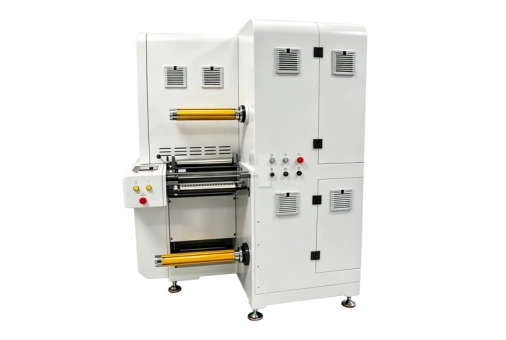
Choosing the right digital label machine helps B2B buyers reduce waste, improve efficiency, and achieve consistent label quality.
Understanding Digital Label Machines and Their Core Features
A Digital Label Machine is a high-quality printing system for businesses that can print digital artwork directly on materials without using plates, exposure methods, or registering colors by hand. This difference means that companies that print labels, make boxes, and make RFID labels can save money and change their process more quickly.
Types and Performance Benchmarks
The market includes small desktop units that are good for pilot batches and high-throughput roll-to-roll systems that are made for continuous production. Native print resolution, production speed (measured in meters per minute), supported media types (BOPP, PET, PE, textured papers), and color gamut coverage are some of the most important performance indicators that business buyers should look at. Smithers Pira (2023) says that digital label printing now makes up more than 22% of all label production. This number is steadily going up as companies shorten the life cycles of their products.
Compatibility with input files is just as important. Accepting standard forms like TIFF and PDF makes it easier for design teams and outside companies to prepare files.
Print Accuracy and Registration
Managers of production and engineering pay close attention to repeat placement accuracy as a measure. The Honghua high-speed label press has a combined printing unit with a tolerance of 0.005 mm. This removes the tiny misalignment that leads to color ghosting in multi-layer label work. When combined with patented splicing technology for seamless web printing, this level of mechanical precision works well for anti-counterfeiting codes, pharmaceutical serialization, and the look of high-end cosmetic labels.
Key Features That Address B2B Procurement Needs
When purchasing managers have to balance capital budgets with production flexibility, they need Digital Label Machines that can grow without having to make expensive platform changes.
Here are the core technical and operational attributes worth evaluating on any serious shortlist:
- Modular, plate-free architecture: Since opening plates and UV exposure aren't needed, there are no more per-job tooling costs. This is a clear cost benefit for printing in small quantities, with multiple designs, in multiple batches, and quickly. When brands handle dozens of SKUs each season, they get payback times that regular flexo presses can't match.
- Dual-curing technology: Using both LED and traditional curing saves energy and makes sure that the ink sticks well to a variety of substrates. The LED part makes the lamp last longer and puts out less heat, which protects heat-sensitive materials like thin films (thickness range: 0.02 to 1 mm).
- Automated self-diagnostics and printhead protection: Intelligent printhead safeguards and automatic foreign object detection cut down on unplanned downtime. Through a unique ink circuit design, a holiday mode that is triggered within one minute of powering off keeps printheads hydrated during shift breaks, protecting a part that costs a lot to maintain.
- Full-circuit ink temperature control: Starting with the main ink cartridges, the whole ink pathway is kept at the same temperature. This keeps the viscosity and color density stable all year, whether the production floor is in Minnesota in January or along the coast of Southeast Asia in August.
These features take care of the two main worries in business-to-business purchasing: uptime dependability and cost per unit of production. Compared to traditional press setups, facilities that use this design usually report a noticeable drop in material waste during job changes.
Comparing Digital Label Machines: Making the Right Choice for Your Business
Digital vs. Analog: Where the Economics Shift
Digital label production and flexographic label production usually stop making money after less than 2,000 to 3,000 square meters per run. Below that point, the cost of plates, wasted setup time, and operator time make analog printing much more expensive per label. Above that, high-volume flexo still has a lower cost-per-unit, but it quickly loses ground when there are a lot of different jobs to do.
Zebra, Epson, Roland, and HP are all well-known world names, but they all work in different markets. Zebra is great at making compliance labels and heat barcodes. Epson and Roland both do color label work in the middle range. Electrophotographic technology is used by HP Indigo to make high-quality short-run packaging. Shanghai Honghua's industrial roll-to-roll Digital Label Machine is in a different category: a heavy-duty, continuous-production platform with a 1,500 kg frame, an ultra-high-precision machined base plate that has been heat-treated multiple times to ensure permanent dimensional stability, and a 20-year rated operational lifespan.
Specification Highlights for Technical Evaluation
| Parameter | Specification |
|---|---|
| Overall Dimensions | 2 m x 1.5 m x 1.9 m |
| Max. Printing Width | 322 mm |
| Feed Material Width | 75–350 mm |
| Unwinding/Rewinding Roll | Max. 800 mm diameter |
| Operating Power | 20 kW / AC 380V |
| Printing Colors | CMYK four-color |
| Air Supply | Industrial air 0.6–0.8 MPa |
The machine can do front-and-back secondary printing with any color overprinting, which gives you a lot more design choices for labels without having to use a different press for the second pass.
Purchasing and Procurement Guide for Digital Label Machines
Budgeting and Sourcing Strategy
Industrial-grade digital label printing equipment is an investment that procurement teams have to defend by pointing to expected run numbers, labor savings, and lower costs for consumables. It's just as important to look at certification portfolios, manufacturing wait times, and after-sales infrastructure as it is to look at the unit price when looking for a Digital Label Machine provider.
The company Shanghai Honghua has more than 20 certifications and 13 technical patents. With factories in South China, East China, and Southeast Asia, the production lead time is about 60 days, and there are a lot of different ways to get the goods to customers, including international express, sea freight, and air freight. Southeast Asian warehouse space makes it even easier to ship goods to wholesalers in North America and Europe.
A warranty that lasts for 12 months and expert help that lasts a lifetime make the total cost of ownership estimate a lot easier. Long-term ROI estimates are more accurate when buyers take into account online expert support and the availability of spare parts along with the purchase price.
Ensuring Long-Term Value: Maintenance, Upgrades, and Support
Routine nozzle checks, ink circuit reviews, and software updates are all types of preventive maintenance that can stretch the service life of a printhead. Under proper duty-cycle management, the service life of an industrial piezo inkjet system's printhead usually lasts between two and five years. Honghua's platform has a multi-stage negative pressure design that keeps the ink delivery steady, which means that the nozzles don't need to be cleaned as often.
Updating software on a regular basis protects the integrity of variable data printing and the security of production data. Scalable machine modules let production managers increase the capabilities as the number of orders rises. This means that the initial capital investment stays useful as the needs of the business change.
Conclusion
FAQ
What is the break-even point for digital versus flexo label printing?
According to statistics from the industry, the crossover is always less than 2,000 to 3,000 square meters per run. Below this level, digital printing is cheaper per label because there are no plate costs.
What file formats does this label printing machine accept?
The system works with common prepress workflows because it can read TIFF, PDF, and other standard input formats.
How does the dual-curing system benefit production?
When LED curing is mixed with traditional curing, the ink sticks well to a wide range of surfaces while using less energy and protecting sensitive materials from heat.
What substrate thickness range does the machine handle?
The machine can handle materials with a thickness of 0.02 mm to 1 mm, such as thin films, paper, and heavy synthetic stocks.
What kind of after-sales support is available?
Shanghai Honghua offers a 12-month warranty, technical support for life, remote help, and spare parts to customers all over the world.
Partner with Shanghai Honghua — Your Trusted Digital Label Machine Manufacturer
Shanghai Honghua doesn't just sell equipment; we also engineer precision. As a verified digital label machine manufacturer with 13 patents, 20+ certifications, and a design lifespan of 20 years behind every unit, we help label makers, packaging lines, and OEM buyers cut costs and speed up delivery. Reach our technical team directly at [email protected] to request a customized solution drawing or product specification sheet—no minimum order required.
References
1. Smithers Pira. The Future of Digital Print for Labels and Packaging to 2027. Smithers, 2023.
2. TLMI (Tag and Label Manufacturers Institute). Digital Label Printing Technology Report. TLMI, 2022.
3. Packaging Digest. Digital vs. Flexo: Cost Analysis for Short-Run Label Production. Packaging Digest, 2023.
4. FINAT. FINAT World Label Report: Global Label Industry Trends. FINAT, 2023.
5. Labelexpo Global Series. Innovations in Inkjet and UV Curing for Label Presses. Labelexpo Reports, 2022.
6. Printing Industries of America. Digital Printing Technology Standards and Performance Benchmarks. PIA, 2023.
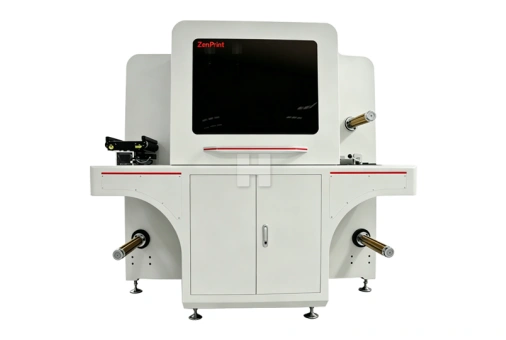
A digital label press helps label manufacturers reduce plate costs, shorten lead times, and produce flexible short runs with consistent quality.
Understanding Digital Label Press Technology
What It Is and How It Works
A Digital Label Press doesn't need to expose and place plates like a standard flexographic press does. Instead, it uses precision print heads to make images straight from TIFF or PDF files. The substrate keeps moving along the web path, the ink is put down with sub-micron accuracy, and the image is locked permanently by an inline curing system that can be LED, UV, or thermal. This makes a finished label that is ready to go to the press without cutting a single plate.
The three main types of technology used in the market are UV inkjet, water-based inkjet, and electrophotographic toner (dry or liquid). UV inkjet is the most popular way to make industrial labels because it is resistant to chemicals, produces bright colors, and works with non-porous films like BOPP and PE, which are what buyers of pharmaceutical, chemical, and food-grade labels want.
Key Components That Drive Performance
The imaging assembly is what makes a high-performance label press work. It includes industrial-grade print heads, a negative-pressure ink delivery system, an ink temperature control circuit, and a base plate that has been carefully made. Registration precision is probably the most important factor. A difference of just 0.05 mm across a multi-color run causes finished labels to be out of alignment, which leads to expensive waste and customer rejections.
The plate-free label press from Shanghai Honghua can repeat position accurately within 0.005 mm. This is possible thanks to an ultra-high-precision base plate that goes through multiple heat processes to keep it from permanently deforming. Its unique ink circuit design turns on holiday mode within one minute of turning off the power. This keeps the print heads from drying out and getting clogged, which is a common problem in places with multiple shifts.
Benefits of Digital Label Presses for B2B Procurement
Data from the industry clearly shows that moving to digital label printing is the right thing to do for business. Smithers' The Future of Digital Printing for Labels and Packaging report says that Digital Label Press output will grow at a rate of more than 8% per year until 2028. This is because of the need for variable data printing and short-run personalization.
For buying and production teams, these are the main benefits of this technology:
- No plate costs or lead time penalties: With traditional flexo plate making, tools cost $300 to $2,000 per job, and there is a wait time of 3 to 7 days. Both of those problems are solved by a digital press, which makes it profitable to take on rush orders and multi-SKU amounts that flexo can't handle cost-effectively.
- Variable data and versioning at zero extra cost: Serialized barcodes, QR codes, lot numbers, and multilingual text can change from print to print at no extra cost, and they can be used for serialization of pharmaceuticals and GHS chemical labeling compliance.
- Reduced substrate waste: Digital make-ready uses a lot less material than traditional presses, so there is less loss. After switching to digital, converters with short runs of less than 3,000 linear meters reliably report 30–50% less substrate waste.
- Broad material compatibility: A good label press can handle material thicknesses from 0.02 mm to 1 mm and feed lengths from 75 mm to 350 mm. It can also handle self-adhesive labels, trademarks, stickers, and color-printed rolls all on the same production base.
These benefits directly address the practical problems that production managers and engineering teams say bother them the most: batch sizes that can't be changed, changeovers that cost a lot of money, and color matching that isn't always accurate across repeat orders.
How to Choose the Right Label Printing Equipment for Your Business
Matching Specifications to Production Demands
Three basic factors should be used to start an organized evaluation: the largest printing width, the color configuration, and the ability to cure on a variety of substrates. Most industrial label converters can handle most product label work with a maximum printing width of 322 mm and CMYK four-color output. Before committing, make sure the Digital Label Press supports inline finishing modules if your customers need special finishes like cold foil, white ink, or gloss.
Both duty cycle and production speed are important. A press with a working power of 20 kW and an industrial air supply of 0.6 to 0.8 MPa is designed to work continuously in a factory, not on a desk or in an office. Purchasing managers should ask for uptime data that has been tried over and over again and directly ask suppliers how long it usually takes for the print head unit to break down.
Digital vs. Flexo: A Practical Cost Comparison
Digital label printing and flexo label printing usually reach a point where they both break even at about 3,000 to 5,000 linear meters per job. When plate prices, make-ready waste, and labor are taken into account, digital is almost always the cheaper choice below that point. When the number of meters per run goes over 10,000, faster linear speeds help wide-web flexo get back to being cheaper. Most mid- to large-sized converters do well with a mix of digital and flexo printing for short runs and versioned work and high-volume commodity labels.
Procurement, After-Sales Support, and Lifecycle Management
Buying a Digital Label Press is a long-term investment that requires trust in both the seller and the machine itself. Shanghai Honghua's equipment has a 20-year service life and lifetime expert support after the sale. This makes the total cost of ownership much lower than with equipment that only comes with a 3–5 year warranty.
The company has many production facilities in China and equipment warehouses in Southeast Asia. This lets them quickly fill orders and makes it easy to clear customs when sending goods to and from many countries. For buyers in the U.S., this means shorter lead times, faster access to spare parts without having to wait for them to cross the country, and a seller that knows how to handle foreign logistics needs, such as FOB, CIF, and DAP terms.
After the printer is set up, it should come with support that includes maintenance schedules for the printhead, where to get ink cartridges, and software updates for the control system. Putting these terms in writing before you buy keeps disputes from happening and keeps production going.
Troubleshooting and Maintaining Your Label Press
There are three main types of problems that a Digital Label Press often has: print head clogging, color registration drift, and substrate feed errors. Shanghai Honghua's unique slit LED technology, which doesn't let any light leak out, is designed to keep the printhead from getting clogged while it's running. This decision was based on real output data from high-humidity factory settings.
To fix register drift, you need to recalibrate the tension control system and make sure the base plate hasn't been heated up and cooled down. Honghua's press has a multi-heat-treatment base plate that is intended to keep its dimensions stable over time. This means that the plate won't warp like it does on cheaper machines, which can lead to long-term register problems.
Automatic identification of foreign objects and smart printhead safety circuits handle substrate jams at speed, which is the most damaging type of failure. When a foreign object is found, the system stops and pulls back the print head assembly before contact damage happens. This keeps expensive head replacements to a minimum.
Conclusion
A reliable digital label press delivers flexible, cost-efficient label production. Choose a trusted supplier for advanced solutions and long-term support.
FAQ
What is the difference between a digital label press and a flexo press?
A Digital Label Press doesn't need plates because it prints directly from digital files. This makes it a cheap choice for short runs, variable data, and quick job changes. A flexo press uses physical plates and works best for long-run, high-volume commodity labels because the cost of the plates is spread out over a lot of them.
How long does installation typically take?
Standard installation for an industrial label press takes three to seven work days, but this depends on how ready the building is, how the power source is set up, and how much training the operator needs.
What consumables does a label press require?
UV or water-based inks (at least CMYK), printer cleaning solution, and substrate primers are the main things that are used up. Substrate primers are needed for ink to stick to low-surface-energy films.
How often should printheads be replaced?
Industrial-grade printer printheads can handle firing trillions of drops. With regular maintenance and ink filtration, the time between replacements can usually be extended to 12–24 months when production loads are normal.
Can the press handle food-safe label substrates?
It depends on how the ink is made. Before agreeing to a substrate and ink combo, check with your provider to make sure that the ink set meets the standards that apply to your project, such as Swiss Ordinance compliance.
Partner with Shanghai Honghua for Your Next Label Press Investment
Shanghai Honghua offers tried-and-true Digital Label Press options that are backed by 13 technical patents, machinery that lasts 20 years, and support that lasts a lifetime. As a reliable manufacturer, we serve B2B customers around the world. From our factories in China and Southeast Asia, we offer full OEM/ODM customization, a flexible MOQ, and shipping all over the world. You can email our team at [email protected] to get a personalized quote or a live sample of the product.
References
1. Smithers Pira. The Future of Digital Printing for Labels and Packaging to 2028. Smithers, 2023.
2. Leach, Robert H., et al. The Printing Ink Manual. 5th ed., Springer, 1993.
3. Kipphan, Helmut. Handbook of Print Media: Technologies and Production Methods. Springer, 2001.
4. TLMI (Tag and Label Manufacturers Institute). Digital Label Printing Technology Report. TLMI, 2022.
5. Pira International. Label and Narrow Web Market Report. Pira International, 2021.
6. ISO/IEC 15416. Information Technology — Automatic Identification and Data Capture Techniques — Bar Code Print Quality Test Specification: Linear Symbols. ISO, 2016.
A digital roll label printer helps businesses produce high-quality roll labels faster without plates. It is designed for short runs, variable data printing, and flexible packaging needs. This technology supports industries requiring quick changes, consistent quality, and lower production costs.
Understanding Digital Roll Label Printers: Technology and Applications
How the Core Technology Works
These days, roll-fed label printers mostly use piezoelectric inkjet imaging, which fires tiny drops exactly onto substrate surfaces without touching them. Flexographic printing needs actual plates to be made, exposed, and mounted. A Digital Roll Label Printer, on the other hand, can read TIFF, PDF, or similar files and print them right away. This makes the repeat positioning accuracy as good as 0.005 mm, which is very important for printing serialized barcodes, micro-text, or multi-color artwork that needs to be tightly registered.
Substrates and Material Versatility
These tools can work with a huge variety of materials. Material thickness compatibility ranges from 0.02 mm to 1 mm, and feed material widths usually range from 75 mm to 350 mm. This means that normal paper labels, BOPP films, PET, PE, silver metallic films, and unique synthetic substrates can all be used on the same platform without having to change the way it is set up mechanically. The substrate you choose has a direct effect on how well the ink sticks, how resistant it is to chemicals, and how long it lasts on the shelf. That's why procurement engineers should always make sure that the ink and substrate are compatible before committing to a substrate specification.
Key Benefits of Digital Roll Label Printers for B2B Procurement
Variable Data Printing and Short-Run Economics
One clear business benefit is being able to print serialized QR codes, sequential batch numbers, or custom branding without having to pay extra for each job. When compared to flexographic setup, Digital Roll Label Printers regularly save 15–20% in material waste and don't require any plate costs. This is a savings that grows quickly for product lines with a lot of SKUs or that need to be reordered often. When purchasing managers look at the total cost of ownership, these numbers make digital printing the clear winner for runs shorter than about 3,000 linear meters.
When it comes to production, these are the main benefits that make this technology appealing to B2B buyers:
- Zero plate cost per job: No plates need to be made or exposed, so there are no costs for pre-press, and delivery times are much shorter for urgent or unique orders.
- Exceptional color fidelity: The CMYK four-color output and the usual dual curing system work together to produce bright, long-lasting results that meet the high standards for retail and pharmacy packaging without any spot color surcharges.
- Front-and-back secondary printing: The integrated printing unit allows for random color overprinting on both sides of the web. This makes it possible to print label designs that are hard for traditional narrow-web presses to do cost-effectively.
- Consistent ink performance year-round: A full-circuit ink temperature control system, which works from the main ink tubes through the whole circuit, keeps the thickness from changing, so the dots always go where they should, even when the temperature outside changes with the seasons.
These benefits directly lead to measurable production gains: shorter lead times, lower scrap rates, and the ability to make last-minute changes to orders without incurring costs—all of which are necessary for label converters that work with markets for fast-moving consumer goods.
Comparison and Decision-Making: Choosing the Right Digital Roll Label Printer
Digital vs. Flexographic vs. Thermal Transfer
Flexographic printing is still a good deal for very long, static print runs where the plates don't wear out very quickly. Thermal transfer printing works well for printing simple black-and-white variable data on manmade materials. Digital Roll Label Printers, on the other hand, work best when run lengths are short, artwork changes often, or color quality must be realistic. The useful split point, where digital is cheaper than flexo, is usually somewhere between 1,000 and 5,000 meters, but this depends on how complicated the label is and how many colors it has.
Key Specification Benchmarks to Evaluate
When comparing machines, these factors should come first:
- Maximum printing width: A print width of 322 mm can handle most self-adhesive label and sticker forms used in B2B markets in North America.
- Unwinding and rewinding roll diameter: A maximum roll diameter of 800 mm lowers the number of times the web needs to be changed during high-volume runs, which significantly increases uptime.
- Curing system architecture: A dual curing system that uses both LEDs and mercury lamps lasts longer, uses less energy, and works with a wider range of ink chemicals.
- Mechanical stability: An ultra-high-precision machined base plate that has been through multiple heat processes will not permanently deform over the 20-year service life of the machine, protecting long-term register accuracy.
When making a purchase, you should also think about the length of the guarantee, the availability of extra parts, and whether the seller offers ongoing technical support. These are all things that affect the total running cost, which is different from the purchase price.
Maintenance and Troubleshooting of Digital Roll Label Printers
Protecting Printhead Performance
The single most important factor in Digital Roll Label Printer maintenance is how long the printhead lasts. If they are used properly, industrial piezo printheads can last for five to seven years. However, they usually break down because of contamination or dry-ink clogging. Advanced systems use unique slit LED technology that stops any light from leaking around the printer zone. This keeps UV-curable ink from solidifying in the nozzle channels while the system is running, which is a very clever way to solve a long-lasting and expensive problem.
As part of regular maintenance, the nozzles should be checked, the ink circuit should be cleared at set times, and the software should be updated to maintain the motion-control calibration. A holiday mode that turns on within one minute of powering off instantly closes the ink circuit to protect printheads even more during unplanned downtime or shift changes. Intelligent printhead safety circuitry and automatic foreign object recognition add another layer of security against substrate jams and debris getting into the printhead.
For production settings where unplanned downtime costs a lot, it's essential to work with a supplier that offers quick response times after the sale and technical support for life.
Practical Use Cases of Digital Roll Label Printers in Global B2B Settings
Where This Technology Delivers the Most Value
Digital Roll Label Printers are used in a huge number of different fields. Craft beverage makers who make dozens of seasonal SKUs depend on it for short runs with a lot of style. Companies that make medicines and supplements use it to print medical-grade films with high-density micro-text and numbered 2D barcodes that meet FDA and GS1 tracking standards. Industrial and chemical companies that make GHS-compliant warning labels depend on UV-cured ink durability to keep the labels readable after being exposed to oils, solvents, and long-term UV radiation, often in line with BS5609 Section 3 maritime shipping standards.
The story about scaling is just as interesting. In the afternoon, the same machine that does a 200-meter craft label run in the morning can also do a 2,000-meter makeup reorder. There is no mechanical switch, and the file-swap job setup takes minutes instead of hours. Companies that use eco-friendly materials and low-energy LED curing say their VOC emissions and energy use go down by measurable amounts. This is becoming an increasingly important factor for B2B buyers who have to buy in a way that is good for the environment.
Conclusion
A digital roll label printer provides flexible, efficient label production for industries needing speed and customization. Explore our label printing solutions to improve your workflow and meet changing market demands.
FAQ
What substrates can a roll-fed digital label printer handle?
Paper, BOPP, PET, PE, silver film, and textured synthetic materials can all be printed on by most industrial Digital Roll Label Printers. Most self-adhesive label stocks used in food, drug, and industrial packaging are compatible with materials ranging in thickness from 0.02 mm to 1 mm.
How does digital printing compare to flexographic printing for short runs?
When compared to flexographic printing, digital printing doesn't require any plates and wastes 15% to 20% less material. If you print less than 3,000 linear meters, it's cheaper than flexo, and you can print variable data, which you can't do with flexo without hybrid workarounds.
What is the expected service life of this type of equipment?
Industrial roll label printers that are well-designed and built on accurate base plates that have been heated are made to last up to 20 years. If you take care of your printhead and use automatic protection systems, it should last between five and seven years.
Can the machine integrate with existing finishing lines?
Yes. Most of them can work with semi-rotary die-cutters and UV varnish stations either near-line or in-line thanks to digital timing marks. This makes it easy to add them to current label converting processes.
How important is ink temperature control for print consistency?
Important. A full-circuit ink temperature control system works from the main ink cartridges to all the channels that come after them. It stops viscosity drift that happens when the temperature outside changes, so the dots are always the same size and color density across all meters of output.
Partner with Shanghai Honghua — Your Trusted Digital Roll Label Printer Supplier
Shanghai Honghua Digital Equipment Co., Ltd. has been in business for more than 20 years and has 13 technical patents and production sites in South China, East China, and Southeast Asia. Our plate-free, high-speed Digital Roll Label Printer equipment is designed to print self-adhesive labels, stickers, trademarks, and color roll labels. It comes with a 12-month warranty, free technical support for life, and flexible global logistics that include air, sea, and express freight. To get a price on a unique solution right away, email our team at [email protected] or go to keguanyiliao.aixdb.cn.
References
1. Leach, R. H., & Pierce, R. J. (Eds.). The Printing Ink Manual (5th ed.). Springer, 1993.
2. Kipphan, H. Handbook of Print Media: Technologies and Production Methods. Springer, 2001.
3. Smithers Pira. The Future of Digital Printing to 2026. Smithers Pira, 2021.
4. TLMI (Tag and Label Manufacturers Institute). 2023 Digital Label Printing Market Report. TLMI, 2023.
5. Fogra Research Institute. Color Management and Quality Control in Digital Label Printing. Fogra, 2022.
6. FINAT (European Label Industry Association). FINAT World Label Report: Global Label Market Trends and Forecasts. FINAT, 2023.
Choosing the right digital label machine helps B2B buyers reduce waste, improve efficiency, and achieve consistent label quality.
Understanding Digital Label Machines and Their Core Features
A Digital Label Machine is a high-quality printing system for businesses that can print digital artwork directly on materials without using plates, exposure methods, or registering colors by hand. This difference means that companies that print labels, make boxes, and make RFID labels can save money and change their process more quickly.
Types and Performance Benchmarks
The market includes small desktop units that are good for pilot batches and high-throughput roll-to-roll systems that are made for continuous production. Native print resolution, production speed (measured in meters per minute), supported media types (BOPP, PET, PE, textured papers), and color gamut coverage are some of the most important performance indicators that business buyers should look at. Smithers Pira (2023) says that digital label printing now makes up more than 22% of all label production. This number is steadily going up as companies shorten the life cycles of their products.
Compatibility with input files is just as important. Accepting standard forms like TIFF and PDF makes it easier for design teams and outside companies to prepare files.
Print Accuracy and Registration
Managers of production and engineering pay close attention to repeat placement accuracy as a measure. The Honghua high-speed label press has a combined printing unit with a tolerance of 0.005 mm. This removes the tiny misalignment that leads to color ghosting in multi-layer label work. When combined with patented splicing technology for seamless web printing, this level of mechanical precision works well for anti-counterfeiting codes, pharmaceutical serialization, and the look of high-end cosmetic labels.
Key Features That Address B2B Procurement Needs
When purchasing managers have to balance capital budgets with production flexibility, they need Digital Label Machines that can grow without having to make expensive platform changes.
Here are the core technical and operational attributes worth evaluating on any serious shortlist:
- Modular, plate-free architecture: Since opening plates and UV exposure aren't needed, there are no more per-job tooling costs. This is a clear cost benefit for printing in small quantities, with multiple designs, in multiple batches, and quickly. When brands handle dozens of SKUs each season, they get payback times that regular flexo presses can't match.
- Dual-curing technology: Using both LED and traditional curing saves energy and makes sure that the ink sticks well to a variety of substrates. The LED part makes the lamp last longer and puts out less heat, which protects heat-sensitive materials like thin films (thickness range: 0.02 to 1 mm).
- Automated self-diagnostics and printhead protection: Intelligent printhead safeguards and automatic foreign object detection cut down on unplanned downtime. Through a unique ink circuit design, a holiday mode that is triggered within one minute of powering off keeps printheads hydrated during shift breaks, protecting a part that costs a lot to maintain.
- Full-circuit ink temperature control: Starting with the main ink cartridges, the whole ink pathway is kept at the same temperature. This keeps the viscosity and color density stable all year, whether the production floor is in Minnesota in January or along the coast of Southeast Asia in August.
These features take care of the two main worries in business-to-business purchasing: uptime dependability and cost per unit of production. Compared to traditional press setups, facilities that use this design usually report a noticeable drop in material waste during job changes.
Comparing Digital Label Machines: Making the Right Choice for Your Business
Digital vs. Analog: Where the Economics Shift
Digital label production and flexographic label production usually stop making money after less than 2,000 to 3,000 square meters per run. Below that point, the cost of plates, wasted setup time, and operator time make analog printing much more expensive per label. Above that, high-volume flexo still has a lower cost-per-unit, but it quickly loses ground when there are a lot of different jobs to do.
Zebra, Epson, Roland, and HP are all well-known world names, but they all work in different markets. Zebra is great at making compliance labels and heat barcodes. Epson and Roland both do color label work in the middle range. Electrophotographic technology is used by HP Indigo to make high-quality short-run packaging. Shanghai Honghua's industrial roll-to-roll Digital Label Machine is in a different category: a heavy-duty, continuous-production platform with a 1,500 kg frame, an ultra-high-precision machined base plate that has been heat-treated multiple times to ensure permanent dimensional stability, and a 20-year rated operational lifespan.
Specification Highlights for Technical Evaluation
| Parameter | Specification |
|---|---|
| Overall Dimensions | 2 m x 1.5 m x 1.9 m |
| Max. Printing Width | 322 mm |
| Feed Material Width | 75–350 mm |
| Unwinding/Rewinding Roll | Max. 800 mm diameter |
| Operating Power | 20 kW / AC 380V |
| Printing Colors | CMYK four-color |
| Air Supply | Industrial air 0.6–0.8 MPa |
The machine can do front-and-back secondary printing with any color overprinting, which gives you a lot more design choices for labels without having to use a different press for the second pass.
Purchasing and Procurement Guide for Digital Label Machines
Budgeting and Sourcing Strategy
Industrial-grade digital label printing equipment is an investment that procurement teams have to defend by pointing to expected run numbers, labor savings, and lower costs for consumables. It's just as important to look at certification portfolios, manufacturing wait times, and after-sales infrastructure as it is to look at the unit price when looking for a Digital Label Machine provider.
The company Shanghai Honghua has more than 20 certifications and 13 technical patents. With factories in South China, East China, and Southeast Asia, the production lead time is about 60 days, and there are a lot of different ways to get the goods to customers, including international express, sea freight, and air freight. Southeast Asian warehouse space makes it even easier to ship goods to wholesalers in North America and Europe.
A warranty that lasts for 12 months and expert help that lasts a lifetime make the total cost of ownership estimate a lot easier. Long-term ROI estimates are more accurate when buyers take into account online expert support and the availability of spare parts along with the purchase price.
Ensuring Long-Term Value: Maintenance, Upgrades, and Support
Routine nozzle checks, ink circuit reviews, and software updates are all types of preventive maintenance that can stretch the service life of a printhead. Under proper duty-cycle management, the service life of an industrial piezo inkjet system's printhead usually lasts between two and five years. Honghua's platform has a multi-stage negative pressure design that keeps the ink delivery steady, which means that the nozzles don't need to be cleaned as often.
Updating software on a regular basis protects the integrity of variable data printing and the security of production data. Scalable machine modules let production managers increase the capabilities as the number of orders rises. This means that the initial capital investment stays useful as the needs of the business change.
Conclusion
FAQ
What is the break-even point for digital versus flexo label printing?
According to statistics from the industry, the crossover is always less than 2,000 to 3,000 square meters per run. Below this level, digital printing is cheaper per label because there are no plate costs.
What file formats does this label printing machine accept?
The system works with common prepress workflows because it can read TIFF, PDF, and other standard input formats.
How does the dual-curing system benefit production?
When LED curing is mixed with traditional curing, the ink sticks well to a wide range of surfaces while using less energy and protecting sensitive materials from heat.
What substrate thickness range does the machine handle?
The machine can handle materials with a thickness of 0.02 mm to 1 mm, such as thin films, paper, and heavy synthetic stocks.
What kind of after-sales support is available?
Shanghai Honghua offers a 12-month warranty, technical support for life, remote help, and spare parts to customers all over the world.
Partner with Shanghai Honghua — Your Trusted Digital Label Machine Manufacturer
Shanghai Honghua doesn't just sell equipment; we also engineer precision. As a verified digital label machine manufacturer with 13 patents, 20+ certifications, and a design lifespan of 20 years behind every unit, we help label makers, packaging lines, and OEM buyers cut costs and speed up delivery. Reach our technical team directly at [email protected] to request a customized solution drawing or product specification sheet—no minimum order required.
References
1. Smithers Pira. The Future of Digital Print for Labels and Packaging to 2027. Smithers, 2023.
2. TLMI (Tag and Label Manufacturers Institute). Digital Label Printing Technology Report. TLMI, 2022.
3. Packaging Digest. Digital vs. Flexo: Cost Analysis for Short-Run Label Production. Packaging Digest, 2023.
4. FINAT. FINAT World Label Report: Global Label Industry Trends. FINAT, 2023.
5. Labelexpo Global Series. Innovations in Inkjet and UV Curing for Label Presses. Labelexpo Reports, 2022.
6. Printing Industries of America. Digital Printing Technology Standards and Performance Benchmarks. PIA, 2023.
A digital label press helps label manufacturers reduce plate costs, shorten lead times, and produce flexible short runs with consistent quality.
Understanding Digital Label Press Technology
What It Is and How It Works
A Digital Label Press doesn't need to expose and place plates like a standard flexographic press does. Instead, it uses precision print heads to make images straight from TIFF or PDF files. The substrate keeps moving along the web path, the ink is put down with sub-micron accuracy, and the image is locked permanently by an inline curing system that can be LED, UV, or thermal. This makes a finished label that is ready to go to the press without cutting a single plate.
The three main types of technology used in the market are UV inkjet, water-based inkjet, and electrophotographic toner (dry or liquid). UV inkjet is the most popular way to make industrial labels because it is resistant to chemicals, produces bright colors, and works with non-porous films like BOPP and PE, which are what buyers of pharmaceutical, chemical, and food-grade labels want.
Key Components That Drive Performance
The imaging assembly is what makes a high-performance label press work. It includes industrial-grade print heads, a negative-pressure ink delivery system, an ink temperature control circuit, and a base plate that has been carefully made. Registration precision is probably the most important factor. A difference of just 0.05 mm across a multi-color run causes finished labels to be out of alignment, which leads to expensive waste and customer rejections.
The plate-free label press from Shanghai Honghua can repeat position accurately within 0.005 mm. This is possible thanks to an ultra-high-precision base plate that goes through multiple heat processes to keep it from permanently deforming. Its unique ink circuit design turns on holiday mode within one minute of turning off the power. This keeps the print heads from drying out and getting clogged, which is a common problem in places with multiple shifts.
Benefits of Digital Label Presses for B2B Procurement
Data from the industry clearly shows that moving to digital label printing is the right thing to do for business. Smithers' The Future of Digital Printing for Labels and Packaging report says that Digital Label Press output will grow at a rate of more than 8% per year until 2028. This is because of the need for variable data printing and short-run personalization.
For buying and production teams, these are the main benefits of this technology:
- No plate costs or lead time penalties: With traditional flexo plate making, tools cost $300 to $2,000 per job, and there is a wait time of 3 to 7 days. Both of those problems are solved by a digital press, which makes it profitable to take on rush orders and multi-SKU amounts that flexo can't handle cost-effectively.
- Variable data and versioning at zero extra cost: Serialized barcodes, QR codes, lot numbers, and multilingual text can change from print to print at no extra cost, and they can be used for serialization of pharmaceuticals and GHS chemical labeling compliance.
- Reduced substrate waste: Digital make-ready uses a lot less material than traditional presses, so there is less loss. After switching to digital, converters with short runs of less than 3,000 linear meters reliably report 30–50% less substrate waste.
- Broad material compatibility: A good label press can handle material thicknesses from 0.02 mm to 1 mm and feed lengths from 75 mm to 350 mm. It can also handle self-adhesive labels, trademarks, stickers, and color-printed rolls all on the same production base.
These benefits directly address the practical problems that production managers and engineering teams say bother them the most: batch sizes that can't be changed, changeovers that cost a lot of money, and color matching that isn't always accurate across repeat orders.
How to Choose the Right Label Printing Equipment for Your Business
Matching Specifications to Production Demands
Three basic factors should be used to start an organized evaluation: the largest printing width, the color configuration, and the ability to cure on a variety of substrates. Most industrial label converters can handle most product label work with a maximum printing width of 322 mm and CMYK four-color output. Before committing, make sure the Digital Label Press supports inline finishing modules if your customers need special finishes like cold foil, white ink, or gloss.
Both duty cycle and production speed are important. A press with a working power of 20 kW and an industrial air supply of 0.6 to 0.8 MPa is designed to work continuously in a factory, not on a desk or in an office. Purchasing managers should ask for uptime data that has been tried over and over again and directly ask suppliers how long it usually takes for the print head unit to break down.
Digital vs. Flexo: A Practical Cost Comparison
Digital label printing and flexo label printing usually reach a point where they both break even at about 3,000 to 5,000 linear meters per job. When plate prices, make-ready waste, and labor are taken into account, digital is almost always the cheaper choice below that point. When the number of meters per run goes over 10,000, faster linear speeds help wide-web flexo get back to being cheaper. Most mid- to large-sized converters do well with a mix of digital and flexo printing for short runs and versioned work and high-volume commodity labels.
Procurement, After-Sales Support, and Lifecycle Management
Buying a Digital Label Press is a long-term investment that requires trust in both the seller and the machine itself. Shanghai Honghua's equipment has a 20-year service life and lifetime expert support after the sale. This makes the total cost of ownership much lower than with equipment that only comes with a 3–5 year warranty.
The company has many production facilities in China and equipment warehouses in Southeast Asia. This lets them quickly fill orders and makes it easy to clear customs when sending goods to and from many countries. For buyers in the U.S., this means shorter lead times, faster access to spare parts without having to wait for them to cross the country, and a seller that knows how to handle foreign logistics needs, such as FOB, CIF, and DAP terms.
After the printer is set up, it should come with support that includes maintenance schedules for the printhead, where to get ink cartridges, and software updates for the control system. Putting these terms in writing before you buy keeps disputes from happening and keeps production going.
Troubleshooting and Maintaining Your Label Press
There are three main types of problems that a Digital Label Press often has: print head clogging, color registration drift, and substrate feed errors. Shanghai Honghua's unique slit LED technology, which doesn't let any light leak out, is designed to keep the printhead from getting clogged while it's running. This decision was based on real output data from high-humidity factory settings.
To fix register drift, you need to recalibrate the tension control system and make sure the base plate hasn't been heated up and cooled down. Honghua's press has a multi-heat-treatment base plate that is intended to keep its dimensions stable over time. This means that the plate won't warp like it does on cheaper machines, which can lead to long-term register problems.
Automatic identification of foreign objects and smart printhead safety circuits handle substrate jams at speed, which is the most damaging type of failure. When a foreign object is found, the system stops and pulls back the print head assembly before contact damage happens. This keeps expensive head replacements to a minimum.
Conclusion
A reliable digital label press delivers flexible, cost-efficient label production. Choose a trusted supplier for advanced solutions and long-term support.
FAQ
What is the difference between a digital label press and a flexo press?
A Digital Label Press doesn't need plates because it prints directly from digital files. This makes it a cheap choice for short runs, variable data, and quick job changes. A flexo press uses physical plates and works best for long-run, high-volume commodity labels because the cost of the plates is spread out over a lot of them.
How long does installation typically take?
Standard installation for an industrial label press takes three to seven work days, but this depends on how ready the building is, how the power source is set up, and how much training the operator needs.
What consumables does a label press require?
UV or water-based inks (at least CMYK), printer cleaning solution, and substrate primers are the main things that are used up. Substrate primers are needed for ink to stick to low-surface-energy films.
How often should printheads be replaced?
Industrial-grade printer printheads can handle firing trillions of drops. With regular maintenance and ink filtration, the time between replacements can usually be extended to 12–24 months when production loads are normal.
Can the press handle food-safe label substrates?
It depends on how the ink is made. Before agreeing to a substrate and ink combo, check with your provider to make sure that the ink set meets the standards that apply to your project, such as Swiss Ordinance compliance.
Partner with Shanghai Honghua for Your Next Label Press Investment
Shanghai Honghua offers tried-and-true Digital Label Press options that are backed by 13 technical patents, machinery that lasts 20 years, and support that lasts a lifetime. As a reliable manufacturer, we serve B2B customers around the world. From our factories in China and Southeast Asia, we offer full OEM/ODM customization, a flexible MOQ, and shipping all over the world. You can email our team at [email protected] to get a personalized quote or a live sample of the product.
References
1. Smithers Pira. The Future of Digital Printing for Labels and Packaging to 2028. Smithers, 2023.
2. Leach, Robert H., et al. The Printing Ink Manual. 5th ed., Springer, 1993.
3. Kipphan, Helmut. Handbook of Print Media: Technologies and Production Methods. Springer, 2001.
4. TLMI (Tag and Label Manufacturers Institute). Digital Label Printing Technology Report. TLMI, 2022.
5. Pira International. Label and Narrow Web Market Report. Pira International, 2021.
6. ISO/IEC 15416. Information Technology — Automatic Identification and Data Capture Techniques — Bar Code Print Quality Test Specification: Linear Symbols. ISO, 2016.