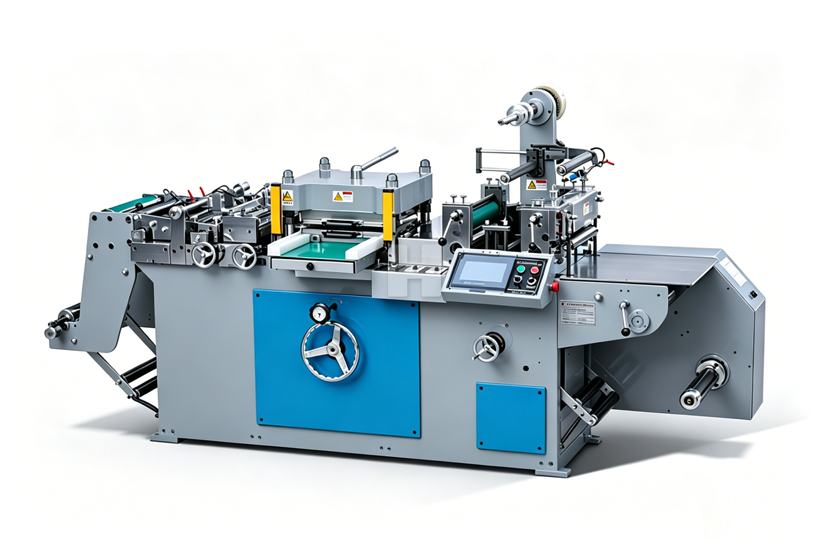
What Is a Digital Roll Label Printer Used For?
A digital roll label printer helps businesses produce high-quality roll labels faster without plates. It is designed for short runs, variable data printing, and flexible packaging needs. This technology supports industries requiring quick changes, consistent quality, and lower production costs.
Understanding Digital Roll Label Printers: Technology and Applications
How the Core Technology Works
These days, roll-fed label printers mostly use piezoelectric inkjet imaging, which fires tiny drops exactly onto substrate surfaces without touching them. Flexographic printing needs actual plates to be made, exposed, and mounted. A Digital Roll Label Printer, on the other hand, can read TIFF, PDF, or similar files and print them right away. This makes the repeat positioning accuracy as good as 0.005 mm, which is very important for printing serialized barcodes, micro-text, or multi-color artwork that needs to be tightly registered.
Substrates and Material Versatility
These tools can work with a huge variety of materials. Material thickness compatibility ranges from 0.02 mm to 1 mm, and feed material widths usually range from 75 mm to 350 mm. This means that normal paper labels, BOPP films, PET, PE, silver metallic films, and unique synthetic substrates can all be used on the same platform without having to change the way it is set up mechanically. The substrate you choose has a direct effect on how well the ink sticks, how resistant it is to chemicals, and how long it lasts on the shelf. That's why procurement engineers should always make sure that the ink and substrate are compatible before committing to a substrate specification.
Key Benefits of Digital Roll Label Printers for B2B Procurement
Variable Data Printing and Short-Run Economics
One clear business benefit is being able to print serialized QR codes, sequential batch numbers, or custom branding without having to pay extra for each job. When compared to flexographic setup, Digital Roll Label Printers regularly save 15–20% in material waste and don't require any plate costs. This is a savings that grows quickly for product lines with a lot of SKUs or that need to be reordered often. When purchasing managers look at the total cost of ownership, these numbers make digital printing the clear winner for runs shorter than about 3,000 linear meters.
When it comes to production, these are the main benefits that make this technology appealing to B2B buyers:
- Zero plate cost per job: No plates need to be made or exposed, so there are no costs for pre-press, and delivery times are much shorter for urgent or unique orders.
- Exceptional color fidelity: The CMYK four-color output and the usual dual curing system work together to produce bright, long-lasting results that meet the high standards for retail and pharmacy packaging without any spot color surcharges.
- Front-and-back secondary printing: The integrated printing unit allows for random color overprinting on both sides of the web. This makes it possible to print label designs that are hard for traditional narrow-web presses to do cost-effectively.
- Consistent ink performance year-round: A full-circuit ink temperature control system, which works from the main ink tubes through the whole circuit, keeps the thickness from changing, so the dots always go where they should, even when the temperature outside changes with the seasons.
These benefits directly lead to measurable production gains: shorter lead times, lower scrap rates, and the ability to make last-minute changes to orders without incurring costs—all of which are necessary for label converters that work with markets for fast-moving consumer goods.
Comparison and Decision-Making: Choosing the Right Digital Roll Label Printer
Digital vs. Flexographic vs. Thermal Transfer
Flexographic printing is still a good deal for very long, static print runs where the plates don't wear out very quickly. Thermal transfer printing works well for printing simple black-and-white variable data on manmade materials. Digital Roll Label Printers, on the other hand, work best when run lengths are short, artwork changes often, or color quality must be realistic. The useful split point, where digital is cheaper than flexo, is usually somewhere between 1,000 and 5,000 meters, but this depends on how complicated the label is and how many colors it has.
Key Specification Benchmarks to Evaluate
When comparing machines, these factors should come first:
- Maximum printing width: A print width of 322 mm can handle most self-adhesive label and sticker forms used in B2B markets in North America.
- Unwinding and rewinding roll diameter: A maximum roll diameter of 800 mm lowers the number of times the web needs to be changed during high-volume runs, which significantly increases uptime.
- Curing system architecture: A dual curing system that uses both LEDs and mercury lamps lasts longer, uses less energy, and works with a wider range of ink chemicals.
- Mechanical stability: An ultra-high-precision machined base plate that has been through multiple heat processes will not permanently deform over the 20-year service life of the machine, protecting long-term register accuracy.
When making a purchase, you should also think about the length of the guarantee, the availability of extra parts, and whether the seller offers ongoing technical support. These are all things that affect the total running cost, which is different from the purchase price.
Maintenance and Troubleshooting of Digital Roll Label Printers
Protecting Printhead Performance
The single most important factor in Digital Roll Label Printer maintenance is how long the printhead lasts. If they are used properly, industrial piezo printheads can last for five to seven years. However, they usually break down because of contamination or dry-ink clogging. Advanced systems use unique slit LED technology that stops any light from leaking around the printer zone. This keeps UV-curable ink from solidifying in the nozzle channels while the system is running, which is a very clever way to solve a long-lasting and expensive problem.
As part of regular maintenance, the nozzles should be checked, the ink circuit should be cleared at set times, and the software should be updated to maintain the motion-control calibration. A holiday mode that turns on within one minute of powering off instantly closes the ink circuit to protect printheads even more during unplanned downtime or shift changes. Intelligent printhead safety circuitry and automatic foreign object recognition add another layer of security against substrate jams and debris getting into the printhead.
For production settings where unplanned downtime costs a lot, it's essential to work with a supplier that offers quick response times after the sale and technical support for life.
Practical Use Cases of Digital Roll Label Printers in Global B2B Settings
Where This Technology Delivers the Most Value
Digital Roll Label Printers are used in a huge number of different fields. Craft beverage makers who make dozens of seasonal SKUs depend on it for short runs with a lot of style. Companies that make medicines and supplements use it to print medical-grade films with high-density micro-text and numbered 2D barcodes that meet FDA and GS1 tracking standards. Industrial and chemical companies that make GHS-compliant warning labels depend on UV-cured ink durability to keep the labels readable after being exposed to oils, solvents, and long-term UV radiation, often in line with BS5609 Section 3 maritime shipping standards.
The story about scaling is just as interesting. In the afternoon, the same machine that does a 200-meter craft label run in the morning can also do a 2,000-meter makeup reorder. There is no mechanical switch, and the file-swap job setup takes minutes instead of hours. Companies that use eco-friendly materials and low-energy LED curing say their VOC emissions and energy use go down by measurable amounts. This is becoming an increasingly important factor for B2B buyers who have to buy in a way that is good for the environment.
Conclusion
A digital roll label printer provides flexible, efficient label production for industries needing speed and customization. Explore our label printing solutions to improve your workflow and meet changing market demands.
FAQ
What substrates can a roll-fed digital label printer handle?
Paper, BOPP, PET, PE, silver film, and textured synthetic materials can all be printed on by most industrial Digital Roll Label Printers. Most self-adhesive label stocks used in food, drug, and industrial packaging are compatible with materials ranging in thickness from 0.02 mm to 1 mm.
How does digital printing compare to flexographic printing for short runs?
When compared to flexographic printing, digital printing doesn't require any plates and wastes 15% to 20% less material. If you print less than 3,000 linear meters, it's cheaper than flexo, and you can print variable data, which you can't do with flexo without hybrid workarounds.
What is the expected service life of this type of equipment?
Industrial roll label printers that are well-designed and built on accurate base plates that have been heated are made to last up to 20 years. If you take care of your printhead and use automatic protection systems, it should last between five and seven years.
Can the machine integrate with existing finishing lines?
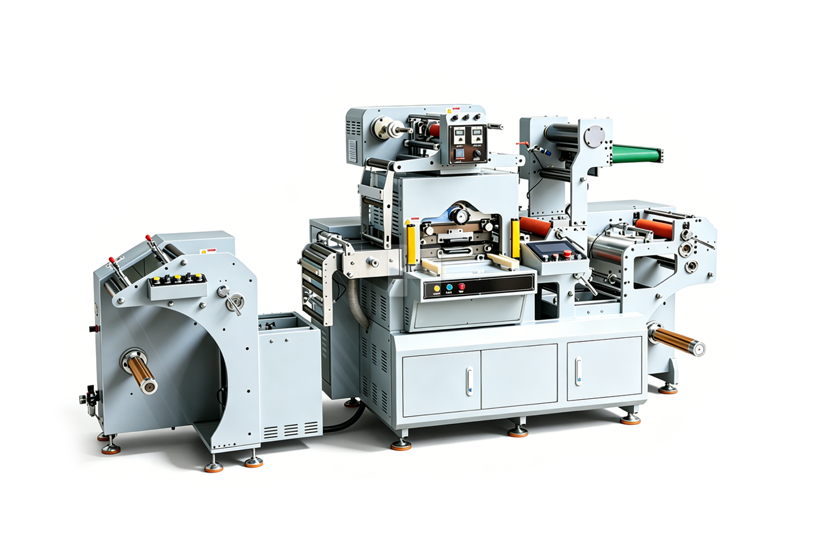
Yes. Most of them can work with semi-rotary die-cutters and UV varnish stations either near-line or in-line thanks to digital timing marks. This makes it easy to add them to current label converting processes.
How important is ink temperature control for print consistency?
Important. A full-circuit ink temperature control system works from the main ink cartridges to all the channels that come after them. It stops viscosity drift that happens when the temperature outside changes, so the dots are always the same size and color density across all meters of output.
Partner with Shanghai Honghua — Your Trusted Digital Roll Label Printer Supplier
Shanghai Honghua Digital Equipment Co., Ltd. has been in business for more than 20 years and has 13 technical patents and production sites in South China, East China, and Southeast Asia. Our plate-free, high-speed Digital Roll Label Printer equipment is designed to print self-adhesive labels, stickers, trademarks, and color roll labels. It comes with a 12-month warranty, free technical support for life, and flexible global logistics that include air, sea, and express freight. To get a price on a unique solution right away, email our team at [email protected] or go to keguanyiliao.aixdb.cn.
References
1. Leach, R. H., & Pierce, R. J. (Eds.). The Printing Ink Manual (5th ed.). Springer, 1993.
2. Kipphan, H. Handbook of Print Media: Technologies and Production Methods. Springer, 2001.
3. Smithers Pira. The Future of Digital Printing to 2026. Smithers Pira, 2021.
4. TLMI (Tag and Label Manufacturers Institute). 2023 Digital Label Printing Market Report. TLMI, 2023.
5. Fogra Research Institute. Color Management and Quality Control in Digital Label Printing. Fogra, 2022.
6. FINAT (European Label Industry Association). FINAT World Label Report: Global Label Market Trends and Forecasts. FINAT, 2023.